Eco-Friendly Flooring Options for Canadian Homes: Why Sustainability Matters
Canadian homeowners are increasingly aware that their choice of eco-friendly flooring options significantly influences their home’s indoor air quality, energy efficiency, and overall environmental footprint. Given Canada's diverse climate and cold winters, selecting sustainable flooring must strike a balance between high performance and true environmental responsibility.
This blog walks you through the best choices, what to look for, and how to make decisions that work for your home and the planet.
What Actually Makes Flooring Eco-Friendly?
Before diving into specific materials, it helps to understand what ‘eco-friendly’ really means in the flooring world. Not every product marketed as green lives up to the label.
Sustainable flooring is typically characterized by a few key attributes: it is made from renewable or recycled materials, minimizes the release of indoor chemicals, and offers longevity to reduce the need for frequent replacement.
To verify these claims, look for reliable certifications such as FloorScore, GREENGUARD Gold, and FSC (Forest Stewardship Council).
Tip 1: Choose Long-Lasting Flooring to Reduce Waste
Durability, often an overlooked aspect of sustainability, is key for eco-friendly flooring choices in Canadian homes. A floor with a 30-year lifespan avoids the environmental burden of two or three replacement cycles.
For Canadian homeowners seeking impactful eco-friendly decisions, choosing durable materials like hardwood, bamboo, and quality porcelain tile—all of which last decades with proper maintenance—is essential.
Tip 2: Look into Hardwood From Responsibly Managed Forests
For homeowners seeking both quality and environmental responsibility, locally sourced solid hardwood is an excellent choice. Woods such as Canadian maple, oak, and ash are available from domestic suppliers, significantly reducing transportation emissions.
Furthermore, choosing hardwood sourced from FSC-certified forests ensures true sustainability. This certification guarantees responsible harvesting practices, including mandatory replanting and protection of the local ecosystem.
Tip 3: Consider Bamboo as a Fast-Renewing Alternative
Bamboo is a highly resource-efficient flooring material. Technically, it is a grass that regenerates much faster than most hardwoods, typically within three to five years. It is also a low-VOC flooring option. For Canadian homes, strand-woven bamboo is particularly effective. It is both harder and more stable than traditional types like hardwood. This makes it better equipped to handle the significant temperature fluctuations experienced in climates that alternate between dry winters and humid summers.
Tip 4: Explore Cork for Comfort and Insulation
Cork flooring stands out as a genuinely renewable material because it is harvested from the bark of cork oak trees, which are never cut down. The trees regenerate their bark naturally over a nine-to-twelve-year cycle, allowing for repeated harvesting throughout their lifespan.
Beyond its exceptional sustainability, cork offers valuable natural benefits, including insulation and soft cushioning underfoot, which is particularly advantageous in colder Canadian climates. Furthermore, its naturally hypoallergenic surface makes it an excellent and practical choice for households mindful of allergy concerns.
Tip 5: Opt for Low VOC Flooring Options to Protect Indoor Air
Improving indoor air quality is vital, particularly in tightly sealed Canadian homes where chemicals can accumulate. These chemicals, known as VOCs (volatile organic compounds), are released by many flooring materials, including adhesives and finishes.
To minimize chemical off-gassing into your living space, select low-VOC flooring. Excellent choices in this category include solid hardwood with water-based finishes, cork, bamboo, and untreated natural stone.
When purchasing engineered wood or laminate, make sure to look for products certified to be low in—or free of—formaldehyde.
Tip 6: Evaluate Sustainable Vinyl and Laminate Carefully
The sustainability of vinyl and laminate flooring has advanced substantially, moving beyond their traditional reputations. Modern manufacturing is increasingly incorporating recycled content, and many newer products are engineered for easy disassembly and recycling at the end of their lifespan.
Look for luxury vinyl tile options, in particular, which are more frequently offering phthalate-free and low-emission formulations.
To ensure genuine sustainability, focus on verified third-party certifications (such as FloorScore) that confirm material sourcing and emission levels, rather than just surface-level claims. When chosen with care, these materials offer a practical and durable solution for moisture-prone environments like basements and bathrooms.
Tip 7: Don't Forget Eco-Friendly Underlayment
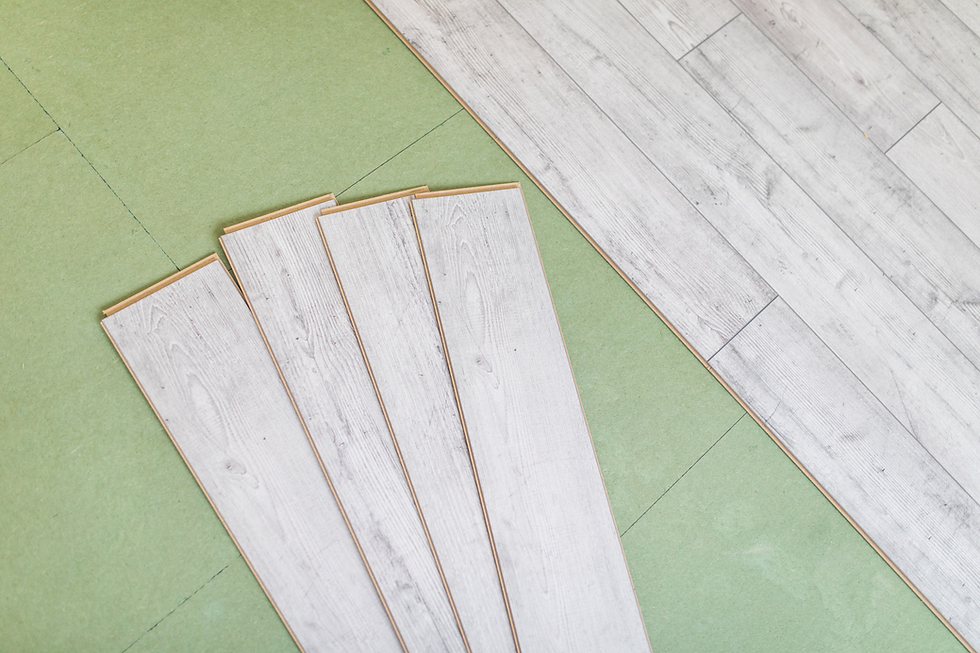
An often-neglected component of any flooring project is the underlayment. Although it remains hidden, its functional and environmental contribution is substantial.
To significantly lower your floor system's overall environmental impact, opt for eco-friendly underlayment options such as recycled rubber, cork, or reclaimed felt. These materials are particularly valuable in multi-story Canadian residences or those with concrete subfloors, as they concurrently boost acoustic performance and thermal insulation.
Homeowners often underestimate the importance of underlayment material selection. Unlike sustainable alternatives, certain synthetic foam underlayments can release chemicals, mirroring the off-gassing issues of the flooring itself.
Tip 8: Choose Recycled or Reclaimed Materials Where Possible
For a truly sustainable flooring choice, consider reclaimed hardwood. Sourced from places like old barns, warehouses, and demolished buildings, it has zero new-harvest impact and prevents usable material from ending up in landfills. This material offers a unique character that new wood simply can't match.
Similarly, eco-friendly options include widely available recycled ceramic and glass tile. A strong sustainability narrative accompanies all these materials. In Canada, you can increasingly find high-quality reclaimed flooring at salvage yards and from specialized suppliers.
Tip 9: Factor in Your Climate Zone
Canada's climate extremes place real demands on flooring. In humid coastal regions like British Columbia, materials with low moisture sensitivity perform better. In the Prairie provinces, where humidity levels drop sharply in winter, solid hardwood can contract and crack without proper acclimatization and humidity control.
Engineered hardwood, cork, and quality laminate handle these fluctuations more reliably than solid wood in many cases. Matching your material choice to your local climate is part of making a responsible, long-lasting decision.
Tip 10: Think About End of Life Before You Buy
Sustainability extends beyond the initial installation. When a floor eventually needs replacement, its disposal is a key consideration. Some options, such as natural hardwood, bamboo, and cork, are genuinely sustainable because they can be easily refinished, repurposed, or even composted. In contrast, materials like vinyl composites and adhesive-backed tiles pose a challenge as they are difficult to separate and recycle.
A truly sustainable choice is one where you consider the end-of-life disposal before purchasing. Asking this forward-looking question helps distinguish genuinely sustainable products from those that merely carry a ‘green’ label.
5 Sustainability Questions to Ask at a Flooring Store
Here are five questions that can help you find eco-friendly flooring options for your Canadian home.
1. Does this product have a FloorScore, GREENGUARD Gold, or FSC certification?
Certifications confirm a product's green claims via third-party verification, making them more than mere marketing hype. If a salesperson can't specify a certification, the product's environmental credentials are probably unverified.
2. Does this flooring have low or no VOCs (volatile organic compounds)?
Flooring with low or no volatile organic compounds (VOCs) significantly enhances indoor air quality. By minimizing the release of harmful chemicals, this type of flooring is crucial for fostering a healthy home atmosphere and preventing the respiratory problems often caused by indoor air pollutants.
3. Where is this material sourced from, and how far did it travel to get here?
Locally sourced materials have a reduced transportation footprint. Furthermore, this also indicates whether the raw materials are derived from recycled sources or responsibly managed forests.
4. Can this flooring be recycled or repurposed at the end of its life?
Knowing how to dispose of flooring materials before you buy is crucial, as some, especially vinyl composites, are incredibly difficult to recycle. This foresight helps prevent contributing unnecessary waste to landfills.
5. How long is this floor expected to last with normal maintenance?
Longevity is a crucial, yet often overlooked, element of sustainability. A floor with a 30-year lifespan effectively eliminates the need for two or three replacements during that period, significantly reducing associated environmental costs.
Making a responsible choice for your home and the planet is easier than ever with the variety of eco-friendly flooring options now available for Canadian homes. Sustainability can be integrated into every layer of your floor system—from low VOC options and sustainable vinyl and laminate to eco-friendly underlayment. The key is knowing which questions to ask. To find the ideal fit for your home and climate, we recommend consulting with a certified flooring professional in your area.


Comments